It is well known that efficient procurement is a key factor for a company’s profitability, but how do we actually know that procurement is efficient? We definitely cannot rely on an “eye estimate” or intuition; we must have precise data in order to talk about the level of efficiency. Therefore, the question that arises is – how to accurately measure the success and efficiency of procurement?
These measurements are truly important because they allow us to optimize processes, identify shortcomings or weaknesses, and improve overall business operations. In this blog, we will explore which key metrics and methods are used to measure procurement performance and whether it can be measured exactly at all.
Seven examples of measuring procurement efficiency and success
- Measuring savings
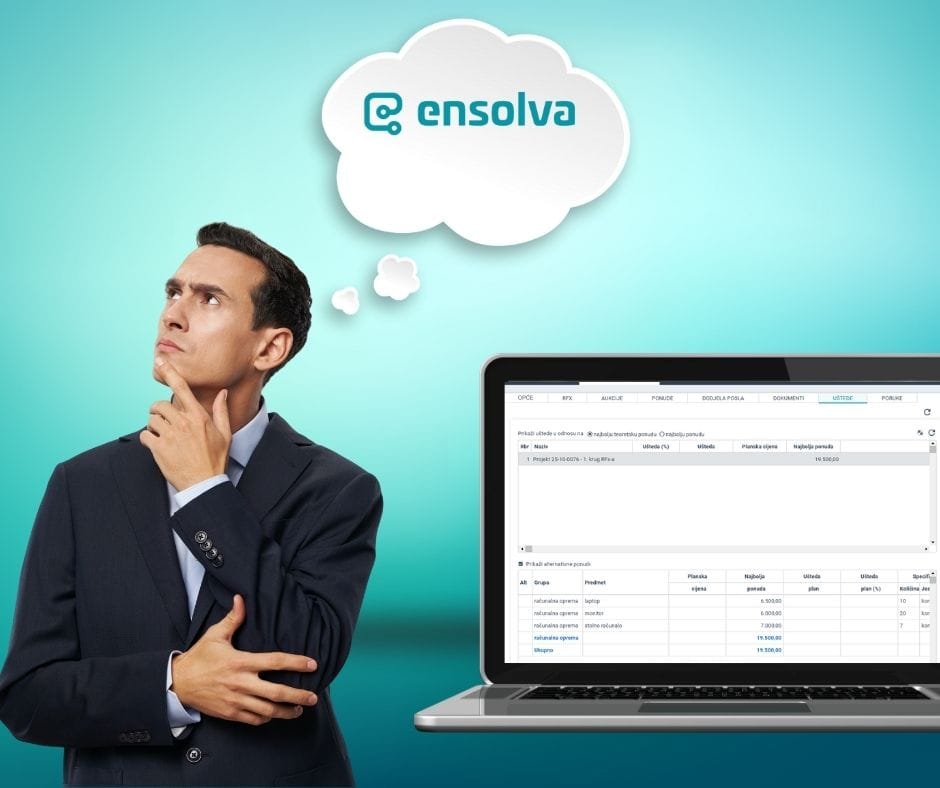
One of the basic ways to measure procurement success is by tracking savings, as is already well known. This measurement actually shows how much procurement has succeeded in reducing costs through negotiations, quantity optimization, use of alternative suppliers, etc. This data is very easy to measure, especially with procurement software solutions that offer analytics. It is important to note that you should not track savings only through price reductions, but also pay attention to improvements in quality, reduction of waste, and logistics optimization.
- Measuring the duration of one procurement cycle
With this measurement you actually measure the time required from the moment the procurement request is received until the moment of delivery. Shorter cycles usually mean greater efficiency and better inventory control. It would be useful to have data on how much time other companies in the industry spend on purchasing certain products and services so that you have a reference framework for comparison. This data, like savings data, can also easily be obtained using procurement software where request dates, tender duration, purchase order dates, and similar information are clearly visible.
- Measuring supplier efficiency
This metric monitors the performance of your suppliers in terms of delivery accuracy, product quality, and fulfillment of contracted terms. How to measure this? Simply introduce supplier questionnaires and a checklist for procurement. Suppliers will provide answers to specific questions about their operations, and procurement will grade their responses – an example is Ensolva’s SAQ questionnaire for supplier evaluation. Include in this the concrete data mentioned at the beginning, based on previous cooperation, and finally quantify the qualitative data with scores.
- Measuring inventory levels and turnover
Measuring inventory levels and inventory turnover helps optimize storage capacity and reduce inventory-related costs. The optimal inventory level is achieved by monitoring key indicators such as inventory turnover rate, average inventory duration, and demand forecast accuracy, which enable efficient inventory management and cost minimization. Implement just-in-time methods and use digital tools for real-time inventory tracking to continuously measure inventory status and thus effectively optimize inventory turnover
- Measuring the number of completed orders per employee
This metric measures how many orders one employee managed to process in a given period. An increase in the number of completed orders while maintaining quality indicates good employee efficiency. If one employee processes 100 orders per month while the industry average is 80, that employee is performing above average. This data can also most easily be obtained using procurement software where the number of procurement projects per employee can be easily retrieved.
- Measuring forecast and inventory planning accuracy
Accuracy of planning and forecasting is half the job for successful procurement. If procurement can accurately predict inventory needs, this reduces the risk of excessive or insufficient stock. For example, if the forecast of raw material needs for the next quarter deviates only 2% from actual consumption, this shows a high level of expertise in planning. Here, the analytical skills of procurement employees come to the forefront. Of course, using analytical tools and past procurement data, you can accurately plan and forecast needs, but also measure the accuracy of individual employees in this area.
- Measuring internal user satisfaction levels
Internal users, such as the production or sales department, are often the end users of procured products and services. Their satisfaction can be measured through surveys or feedback, and a high level of satisfaction indicates the success of procurement employees. If a high percentage of internal users rate the procurement team highly in satisfaction surveys, this is a clear indicator of their efficiency. Regularly conduct user satisfaction surveys and use the results for further process improvement.
How procurement software can help you with that
Measuring procurement performance and the performance of procurement employees is a key step toward improving operational efficiency and achieving the company’s strategic goals. It is most important to first determine criteria, measurement methods, and instruments.
In most measurements, the job is facilitated by procurement software, as we at Ensolva also offer the Analysis and Reporting module for detailed analytical data. However, even using the software without that module provides a kind of analysis since all data is recorded and nothing passes “under the radar.” When you have a clear system of criteria and measurements, you will continuously receive data that should be included in regular reports. These reports will also be an excellent foundation for all future analyses and measurements.
Conclusion
There are many variables and possibilities for measuring procurement performance; we have listed only some examples to highlight the importance of procurement evaluation. Besides ensuring you get the maximum potential from procurement, this will also help you establish a reward system for procurement employees. In this way, you will motivate employees and get the most possible from your procurement!